In short
- Problem
Students showed up, on time, week after week, and got nothing back for it.
- What I did
I replaced three badges on a 60-day clock with five star badges, three tiers each and no expiry.
- Result
3.4× engagement among students active in the badge system after Season 2.
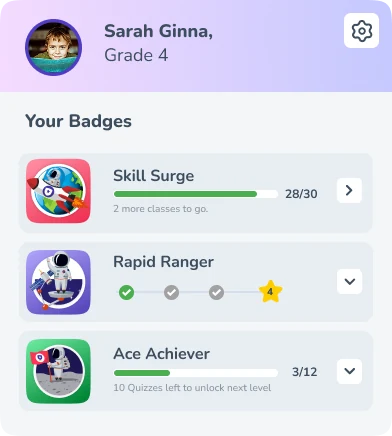
Story
BrightChamps runs live one-on-one classes in coding, robotics, financial literacy and math for 6–16 year olds across 30+ countries.
Attendance, effort, punctuality and performance were all tracked. None of it came back to the student as something to feel good about.
Showing up shouldn't feel invisible.
Two design cycles in, the badge system is the difference between a student who shows up because a class is scheduled, and one who shows up because a streak, a rank or a star is on the line.
Impact
Measured with the product and data team after the Season 2 rollout.
The Problem
A badge-based gamification layer simply didn't exist.
“Gets bored with repetitive exercises. Motivation drops without recognition.”Diya, age 9
How It Evolved
Three simple badges first, to learn what changes behaviour. Then a system built on what they taught us.
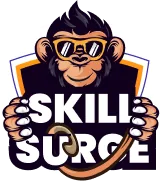
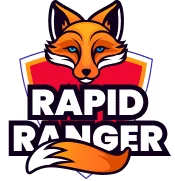
- Ship three badgesRapid Ranger, Ace Achiever and Skill Surge, each on a 60-day clock.
- Learn from itKids raced for them. Only the fastest could win.
- Five ways to show upA star badge per behaviour, three tiers each.
- Put it in the productSidebar, collection page and the class feed.
- MeasureTracked with the product and data team from week one.
Who We Designed For
Three people. One badge. Different needs.
The student earns it. The parent needs to see it. The teacher needs to celebrate it, without extra work.
Badges are what keep me coming back.
WantsVisible progress and bragging rights.
FrustrationHates when effort goes unnoticed.
I want proof she's growing, not just showing up.
WantsA quick read on real progress.
FrustrationOnly sees attended or didn't.
I could tell who was trying. The system couldn't.
WantsCelebrate effort at scale.
Frustration1:1 praise doesn't scale past a few kids.
Season 1 · Rapid Ranger
Three badges. One metric each. One countdown.
Before the full system, we shipped three simple badges side by side: Rapid Ranger, Ace Achiever and Skill Surge. Rapid Ranger, a space-explorer badge tied to class count, shows how they worked: five levels, a 60-day clock and a simple question: do badges actually change behaviour?
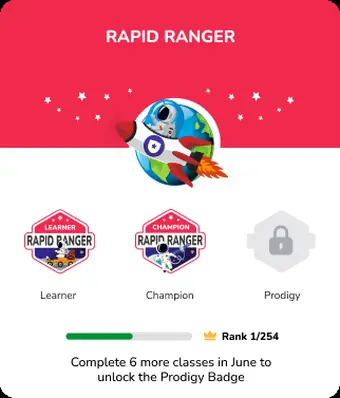
The story kids played“Rocketing through the cosmos, you're a space explorer on a high-speed mission to save your stranded friend.”Season 1 launched as Challenges. Each level was a new stretch of space, from the asteroid belt to the nebula, and the dashboard opened with one line: “Prepare for an odyssey beyond the stars!”

Before launchA banner on the dashboard teased each new challenge, with one button: Notify me.
Finding and joining
A pointer shows where Challenges live. Every brief can be accepted, put off or turned down.
- Where to find ChallengesA one-time pointer on the dashboard: “Access Challenges from here.”Ok, got it
- Accept Challenge“Hello Sarah, you are about to navigate the tumbling rocks of the Asteroid Field… Add maximum possible classes to achieve the highest level.”NextRemind me laterI don't want to participate
- Notify meFor a challenge that hasn't started yet: “You will be notified.”
From badge to booked class
The brief, the level list and the leaderboard each end in the same action: add classes.
- Set the pace“Hello Sarah, let's win this quest! Complete at least 3 classes every week to win.”Add Classes to Win
- One bar per level“Complete 5 classes”, then 10, 15, 20 and 25, before the challenge ends.Add Classes
- On the leaderboard“Hey Sarah, you can add more classes and upgrade your position on the leaderboard.”Add More Classes
28dashboard screens explored for where and how Challenges should appear.
What Season 1 Taught Us
One badge can't do it all
Round one ran three badges in one race. The honest recap:
Ace AchieverSkill SurgeRapid Ranger- Fast to build. One rule per badge. We shipped them in weeks and started learning right away.
- The countdown worked. A deadline got kids moving, and most jumped in during week one.
- Rank alone was enough. A simple leaderboard kept kids checking back.
- Fast doesn't mean deserving. Speedy kids won every time. Slower kids never had a real shot.
- One ladder, one winner. Once the top spot looked out of reach, most kids gave up.
- The deadline cut both ways. When it ended, so did the motivation to keep playing.
- A badge for every kind of effort, not one badge trying to reward everything.
- A next step every kid can actually reach, not just a shot at the very top.
- A system that never really ends, rewarding this month instead of racing a clock.
Rapid Ranger proved kids will race for a badge. Season 2 had to prove the system could reward every kind of kid, not just the fastest one.
Season 2 · The Star Badges
Five badges for five ways of showing up
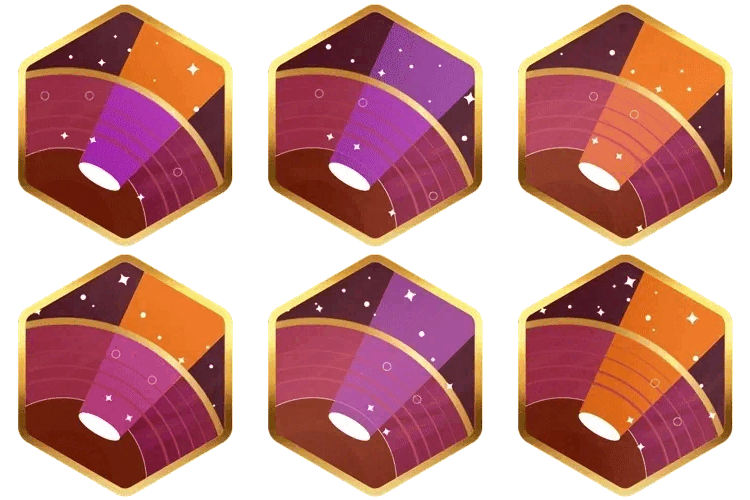
Every badge maps to a metric the system already tracks, and carries three tiers, so there's always a next rung. I designed and animated the art from scratch: five badges, five separate animation passes, so an unlock feels earned.
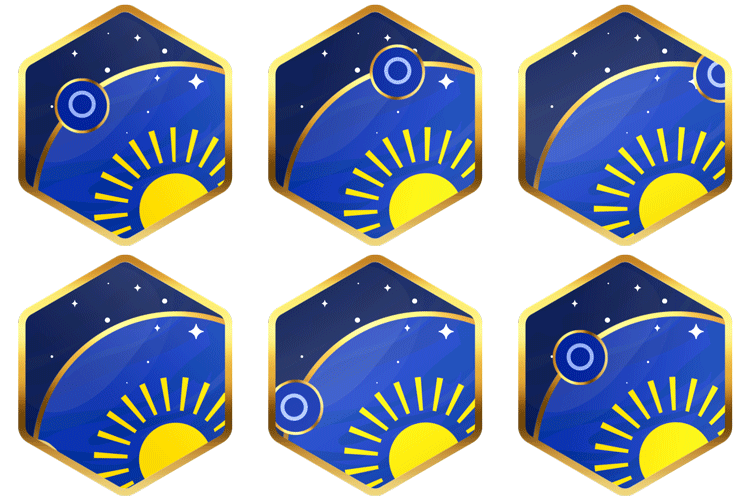 AttendanceRhythm StarAvg. classes / week
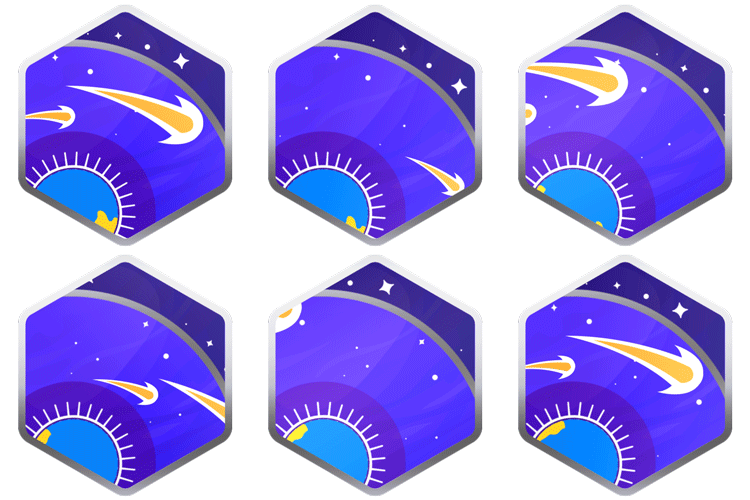 PaceIgnition StarLearning pace / lesson
 EffortGrit StarHW & quiz completion
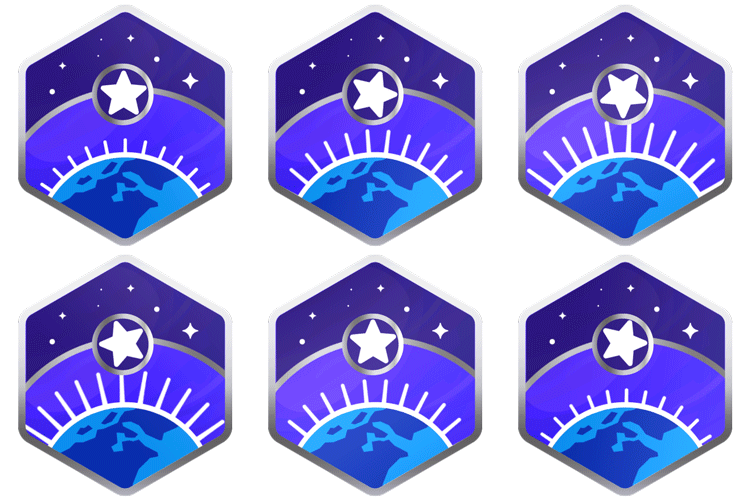 PunctualityHorary StarPunctuality rating
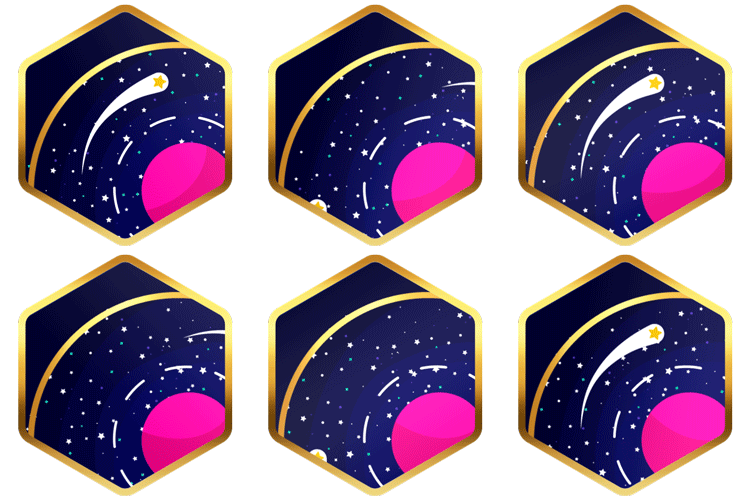 PerformanceTrailblazer StarAvg. quiz score
The motivational copy engine
Where It Lives
From a glance in the sidebar to the full collection
Three surfaces, one badge, each sized to how much attention the moment deserves.

Weekly StreaksWeeks in a row and your level, in one slim bar a student can close.


 The Ignition StarYou unlocked this badge by keeping up your learning pace.View leaderboard →
Look and feel
One space theme, two seasons
Both seasons shipped in space. Animal mascot badges were tried first with a small group of users. Season 1 drew astronauts and rockets, with the badge name lettered on every level. Season 2 kept the space and made it one family: a hexagon, a metal rim and a view from a planet, with a different sky and one object in each.
Two seasons, two looks
Same students, same app. What changed in the art.
Colours with a job
Sampled from the shipped Season 1 screens. Five colours, one job each, so a child can tell what to press and what needs attention without reading. Season 2 kept the same jobs: green for done, gold for the prize.
#4C38C0Every button you press: Accept Challenge, Join, Add more classes.#4060FCHelp and second steps, like “How to earn this badge?”. Text, never a button.#F0284CKept for warnings, like a rank going down, so red never reads as a button.#48AC4CProgress and done: progress bars, checks, a rank going up.#FCC04CThings to know about you, like your rank: your own row on the leaderboard stands out in yellow.#C2C2C6#D9BA69Three states, one row
How a badge looks on the Collection page as a student works toward it.
Results
What changed once the badges went live
We tracked attendance, pace, homework completion and quiz scores from the first week, side by side with the Rewards mechanic already live on the Student Dashboard. Season 2 beat the goals we set for it.
Season 1 rewarded speed, so slower kids stopped trying by week 9. Season 2 rewards steady effort, with a next step every kid can reach, and they kept coming back.


Takeaway
Recognition is a system, not a sticker. Five badges and one monthly goal gave every kid a next step within reach.